
Advertisement
Synthetic wigs have become one of the most popular beauty solutions for people who want to change their hairstyle quickly, protect their natural hair, or achieve a polished look without spending too much money. They are widely used for everyday fashion, protective styling, medical hair loss, cosplay, and professional beauty work.
However, one challenge many wig wearers face is making a synthetic wig look natural. While synthetic wigs have improved greatly in recent years, some still appear shiny, stiff, or wiggy, especially if they are not styled properly.
The good news is that you can transform almost any synthetic wig into a realistic, natural-looking hairstyle with the right techniques. Whether your wig is brand new or old and tangled, this guide will teach you exactly how to make a synthetic wig look like real hairfrom the hairline to the texture, shine, and overall fit.
Advertisement
This article is designed to be highly informative, easy to follow, and safe for SEO and Google Adsense guidelines. You will learn professional-level tricks used by hairstylists, wig makers, and everyday wig wearers to create a flawless finish.
Why Synthetic Wigs Sometimes Look Fake

Synthetic wigs are made from man-made fibers designed to mimic human hair. These fibers are usually acrylic, polyester, or modacrylic materials. While they are engineered to look like hair, they do not behave exactly like real hair.
Here are the most common reasons synthetic wigs may look unnatural:
Too Much Shine
One of the biggest giveaways is shine. Synthetic fibers often reflect light differently than human hair, creating a plastic or glossy appearance, especially under sunlight or camera flash.
Advertisement
Thick or Unnatural Hair Density
Many synthetic wigs are manufactured with a density that is thicker than a real person’s hair. If the wig is too full, it can look like a helmet.
Poor Hairline or Visible Wig Lace
If the lace is too dark, too thick, or doesn’t match your skin tone, the hairline becomes obvious.
Incorrect Wig Placement
A wig placed too far forward, too far back, or unevenly can look unnatural even if the wig itself is high quality.
Wig Doesn’t Match Your Face Shape

Some wigs look unnatural simply because the style doesn’t suit the wearer’s facial structure.
Lack of Styling
Synthetic wigs often come pre-styled, but they still require customizing. Wearing it straight out of the package usually makes it look “store bought.”
Choosing the Right Synthetic Wig for a Natural Look
The best way to make a synthetic wig look natural begins before you even buy it.
Choose a Wig with a Lace Front
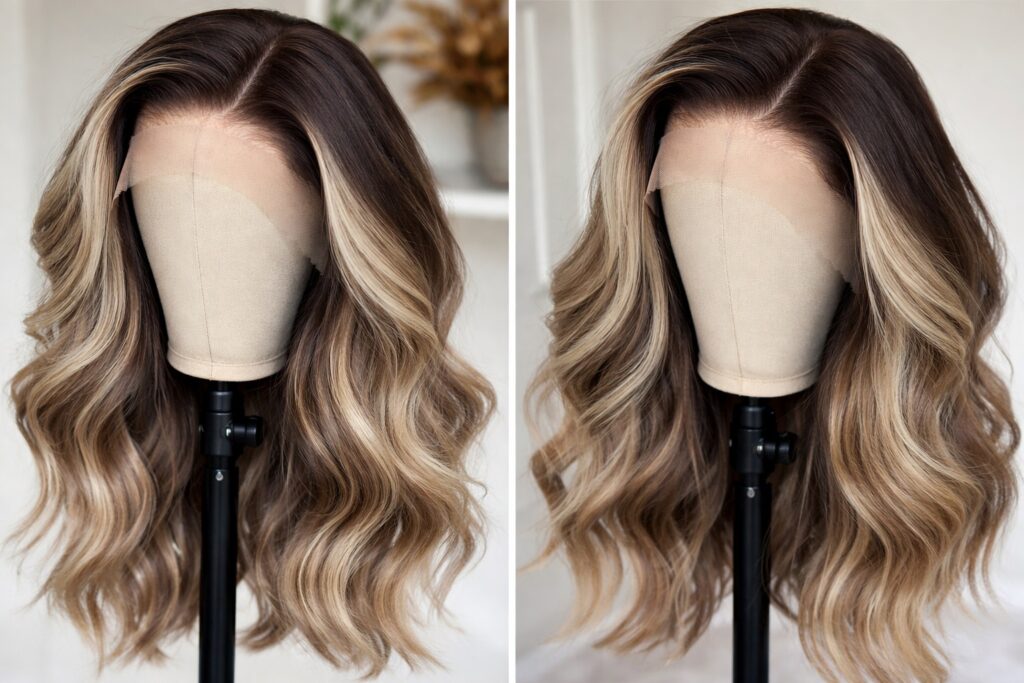
If you want the most realistic hairline, a lace front synthetic wig is usually the best option. Lace front wigs allow the hairline to blend into your skin more naturally.
Best types for realism:
- Lace front synthetic wigs
- HD lace synthetic wigs
- 13×4 lace front synthetic wigs
- 13×6 lace front synthetic wigs
- Full lace synthetic wigs (rare but excellent)
Look for Natural Fiber Texture
Some synthetic wigs are designed with a yaki texture or slight coarseness, which mimics relaxed or blow dried hair.
Natural-looking textures include:
- Kinky straight
- Yaki straight
- Afro kinky
- Loose curls
- Water wave
- Deep wave
- Soft body wave
Avoid wigs that are extremely silky and shiny unless you plan to heavily customize them.
Choose a Realistic Hair Color
Very bright or unnatural colors can still look beautiful, but they may not look like real hair.
For the most natural appearance, consider:
- Natural black
- Off-black
- Dark brown
- Warm brown
- Ombre with natural roots
- Highlighted brown tones
Avoid Extremely Cheap Wigs (When Possible)
Not all inexpensive wigs are bad, but extremely low-quality wigs often have:
- Thick shiny fibers
- Poor lace
- Tangling issues
- Unnatural density
A slightly higher-quality synthetic wig usually looks more realistic and lasts longer.
How to Make a Synthetic Wig Fit like Real Hair
Even the best wig will look fake if it doesn’t fit properly.
Prepare Your Natural Hair Correctly
A flat foundation is key. If your natural hair is bulky under the wig, the wig may sit too high and look unnatural.
Best ways to flatten hair:
- Cornrows (best for long hair)
- Flat twists
- Low bun with wig cap
- Short hair brushed flat with gel
Use a Wig Cap That Matches Your Skin
A nude wig cap helps the lace blend into your scalp.
Tip:
If you only have a black wig cap, you can use foundation powder on it.
Adjust the Wig Straps
Most wigs come with adjustable straps inside.
Steps:
- Put the wig on
- Tighten straps evenly
- Make sure the wig is secure but not painful
Position the Wig Correctly
Your wig should sit slightly behind your natural hairline-not directly on your forehead.
A good rule:
The wig hairline should start about 4 fingers above your eyebrows (depending on your face).
Secure the Wig Naturally
You don’t always need glue, but you do need stability.
Natural-looking securing options:
- Wig grip band
- Elastic band sewn into the wig
- Wig combs
- Got2B freeze spray (popular)
- Lace glue (for long wear)
How to Fix Wig Shine and Make It Look Less Plastic

This is one of the most important steps.
Use Dry Shampoo
Dry shampoo reduces shine and adds realism.
How:
- Spray lightly on the wig
- Brush through
- Repeat if needed
Use Baby Powder (Best for Dark Wigs)
Baby powder is a classic trick.
Steps:
- Put a small amount of baby powder in your hands
- Rub hands together
- Gently pat onto the wig
- Brush through thoroughly
Warning:
Too much powder can make the wig look gray or dusty.
Fabric Softener Spray (For Softness + Less Shine)
Fabric softener diluted in water can soften fibers.
Mix:
- 1 part fabric softener
- 3 parts water
Spray lightly, then comb through.
Steam the Wig
Steam helps reduce stiffness and makes synthetic fibers fall naturally.
Use:
- A garment steamer
- Or a kettle steam method
Steam gently while brushing downward.
How to Make a Synthetic Wig Hairline Look Natural
The hairline is the biggest tell.
Tint the Lace
If your lace is too light, it will look obvious.
Ways to tint lace:
- Lace tint spray
- Foundation makeup
- Powder
- Fabric dye (advanced method)
Use Concealer on the Part
To make the part look like scalp:
- Apply concealer to the inside of the lace part
- Blend evenly
- Set with powder
Create a Natural Parting Space
Some synthetic wigs come with a fake “scalp top.” If it looks too perfect, you can improve it by:
- Tweezing slightly
- Adding powder
- Defining the part with a rat tail comb
How to Pluck a Synthetic Wig (Safely)
Plucking is one of the best ways to make a wig look realistic, but it must be done carefully.
Why Plucking Matters
A natural hairline is not thick and straight. It has:
- Small gaps
- Soft edges
- Slight unevenness
Tools Needed
- Tweezers
- Wig head
- Clips
- Good lighting
How to Pluck
- Place wig on wig head
- Clip hair back
- Start plucking a few strands at a time
- Focus on the front hairline
- Step back often and check
Important:
Do not overpluck. You can always pluck more later.
How to Add Baby Hairs the Right Way
Baby hairs can make a wig look natural, but too much can look fake.
Cut Baby Hairs Correctly
Use a small razor or scissors and cut tiny sections near the hairline.
Style with Gel or Edge Control
Use:
- Edge control
- Mousse
- Wax stick
Keep It Minimal
Natural baby hairs are soft and light. Avoid thick swoops.
Types of Synthetic Wigs
Understanding wig construction helps you choose one that will look natural.
Lace Front Wigs
These have lace along the front hairline, creating a more realistic appearance. Lace fronts allow for off-the-face styling.
Full Lace Wigs
Made entirely of lace, these allow versatile parting and ponytail styling. They are typically more expensive but highly natural-looking.
Monofilament Wigs

These feature a sheer mesh cap where individual strands are hand-tied to simulate natural scalp appearance.
Basic Cap Wigs
These are machine-made and more affordable but often less natural at the hairline.
For the most realistic result, lace front or monofilament synthetic wigs are ideal.
Choosing the Most Natural Wig for Your Face Shape
Not every wig style complements every face shape.
Round Face
Opt for long layers or styles with volume at the crown.
Oval Face
Most styles work well. Avoid excessive top height.
Square Face
Soft waves and layers help soften angular features.
Heart-Shaped Face
Chin-length bobs or layered styles balance proportions.
A wig that complements your face shape automatically looks more believable.
How to Pick the Right Density
Density refers to how thick the wig appears.
- 100–120%: Light density (very natural)
- 130–150%: Medium density (ideal for everyday wear)
- 180%+: Very full (can look dramatic or unrealistic)
For the most natural appearance, stick to medium density. Overly thick wigs often look artificial because natural hair rarely grows that uniformly dense.
Selecting Realistic Colors and Undertones
Color choice significantly impacts realism.
Avoid:
- Flat, one-tone jet black
- Extremely bright, uniform colors
- Shades that clash with your skin undertone
Choose:
- Rooted colors with darker bases
- Subtle highlights
- Shades close to your natural hair color
Dimension and variation create realism.
Preparing Your Natural Hair for a Smooth Base
A flawless wig begins underneath.
Step-by-Step Preparation:
- Wash and condition your natural hair.
- Dry thoroughly.
- Braid hair into flat cornrows or wrap flat around your head.
- Secure with pins if necessary.
Lumps under the wig are a major giveaway. The flatter your base, the more natural the wig will sit.
The Importance of a Proper Wig Cap
Use a wig cap that matches your scalp tone.
Nude, light brown, or dark brown caps help create a realistic scalp illusion. Avoid bright-colored caps that show through lace.
The right cap improves part realism dramatically.
How to Secure a Synthetic Wig Correctly
A shifting wig destroys the illusion instantly.
Secure your wig using:
- Adjustable straps
- Built-in combs
- Wig glue or tape (if needed)
- Wig grips for glue-less application
The wig should sit directly at your natural hairline-not too far back or too low on the forehead.
Customizing the Hairline for Natural Results
Factory hairlines are often too straight and dense.
To soften it:
- Use tweezers to pluck small sections.
- Create uneven spacing.
- Avoid over-plucking in one area.
Natural hairlines are irregular, not perfectly straight.
How to Pluck a Synthetic Wig Safely
Plucking must be done carefully.
Tips:
- Work in natural lighting.
- Pluck gradually.
- Focus behind the hairline.
- Step back frequently to evaluate.
Patience prevents permanent mistakes.
Bleaching Knots Alternative for Synthetic Wigs
Unlike human hair wigs, synthetic wigs cannot be bleached.
Instead:
- Apply concealer underneath the lace.
- Use foundation matching your scalp.
- Tint the lace with lace spray if necessary.
This creates the illusion of scalp without damaging fibers.
How to Style Synthetic Wigs with Heat (Without Damage)
Not all synthetic wigs are heat-friendly.
Check the Label
Some wigs can handle:
- 250°F (120°C)
- 300°F (150°C)
- 350°F (180°C)
If it doesn’t say “heat-friendly,” do not use flat irons.
Use a Low Temperature
Always start low.
Use a Hot Comb Carefully
A hot comb can flatten the roots and make the wig look more natural.
How to Wash and Condition a Synthetic Wig Properly
Washing helps reduce factory shine and makes wigs look more realistic.
How Often to Wash
- Everyday wear: every 10–15 wears
- Occasional wear: every 15–20 wears
- Curly wigs: wash less often
Use Cold Water
Hot water can ruin synthetic fibers.
Use Wig Shampoo or Mild Shampoo
Avoid harsh detergents.
Soak, Don’t Scrub
Scrubbing causes tangling.
How to Detangle and Maintain Synthetic Wigs
A tangled wig looks fake quickly.
Use the Right Brush
Best options:
- Wide tooth comb
- Wig brush
- Paddle brush (for straight wigs)
Detangle from Ends to Roots
Never start brushing from the top.
Use Wig Spray
Synthetic wig spray reduces friction and keeps it smooth.
How to Cut and Shape Synthetic Wigs for Realism
A simple haircut can make a synthetic wig look like a salon style.
Trim the Ends
Factory wigs often have blunt ends.
Trim lightly for softness.
Add Face Framing Layers
Face framing layers instantly create a natural look.
Thin Out the Density
If your wig is too thick:
- Use thinning shears
- Or carefully razor the inside layers
How to Make Synthetic Curls Look Natural
Curls can look too perfect.
Break the Curls Gently
Use fingers to separate curls.
Use Mousse
A small amount of mousse makes curls look softer and more natural.
Avoid Over-Brushing
Brushing curly wigs can create frizz and ruin the curl pattern.
How to Make a Straight Synthetic Wig Look Real
Straight wigs are the easiest to spot if they look too shiny.
Add Texture
Use:
- Dry shampoo
- Light teasing
- Steam shaping
Flatten the Top
If the wig is puffy at the crown:
- Use a hot comb (low heat)
- Or steam and press down
Common Mistakes That Make Wigs Look Fake
Avoid these if you want your synthetic wig to look natural:
- Wearing it straight out of the package
- Not adjusting the hairline
- Using too much glue
- Thick wig cap showing
- Wig placed too far forward
- Too much baby hair
- Overly shiny fibers
- Tangled ends
- Wrong wig size
Professional Tips to Make Any Synthetic Wig Look Expensive

Here are some pro tricks:
Use a Wig Grip
A wig grip makes the wig sit flatter and prevents sliding.
Use Foundation Under the Lace
Applying foundation to your forehead and under the lace helps blending.
Add Root Shadow
If your wig color is too bright, a root shadow makes it look like real hair growth.
Use a Wax Stick
Wax sticks smooth flyaways and give a sleek natural finish.
FAQ: Synthetic Wig Natural Look Questions
Can a synthetic wig look as natural as human hair?
Yes, with customization, some synthetic wigs can look extremely realistic.
How do I stop my synthetic wig from tangling?
Use wig spray, avoid friction, and store it properly.
How long does a synthetic wig last?
Depending on quality:
- Cheap wigs: 2-4 weeks
- Good wigs: 2-6 months
- Premium wigs: 6-12 months